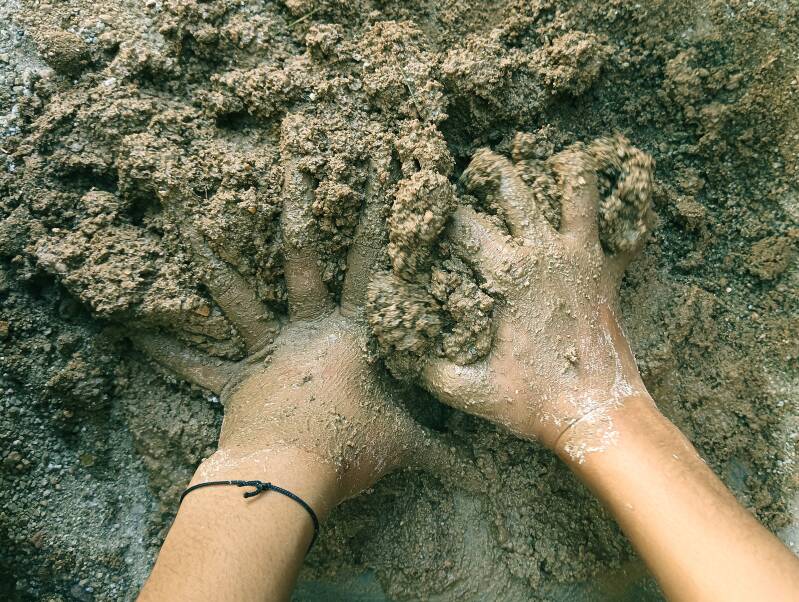
Mud between their fingers. A pocket filled with interesting rocks. Sticks transformed into fishing rods, magic wands, roads, fences and creatures. A patch of dirt that becomes a bakery, laboratory, dinosaur habitat or construction site before morning tea.
Nature has always been one of childhood's richest playgrounds.
And perhaps one of the most beautiful things about nature-based play is that nature rarely tells children what they are supposed to do with it.
A stick doesn't arrive with instructions. A pile of leaves has no predetermined learning outcome. Water, sand, stones, seed pods, bark, flowers and mud can become almost anything when placed in the hands of a child.
That freedom creates extraordinary possibilities for play, learning and discovery.
What is nature-based play?
Nature-based play is children's play with, in and around the natural world.
It might happen in a forest, on a beach or beside a creek, but it doesn't require an enormous outdoor space or an elaborate nature-play playground.
Nature play can happen in a backyard, preschool garden, school playground, balcony or even indoors.
It can include:
-
digging in soil and mud
-
collecting leaves, sticks, stones and seed pods
-
climbing and balancing
-
gardening
-
exploring water and sand
-
building cubbies and shelters
-
observing insects and other wildlife
-
creating with natural loose parts
-
cooking in a mud kitchen
-
caring for plants
-
investigating weather and seasonal changes
-
simply lying underneath a tree and watching the branches move.
The important ingredient isn't the size of the space.
It's the opportunity for children to encounter, explore and develop a relationship with the natural world.
Nature is wonderfully open-ended
One of the great strengths of natural materials is their versatility.
Compare a plastic toy designed to perform one particular function with a basket containing stones, shells, bark, leaves and sticks.
There is no single "correct" way to use those materials.
A stone might become food in a pretend café, treasure in a pirate game, a counter in a mathematics experience or part of an elaborate construction.
A stick might become a spoon, a bridge, a person, a measuring tool or the mast of a ship.
Children decide.
That makes natural materials particularly powerful open-ended play resources, because the possibilities come from the child's ideas rather than being predetermined by the object.
Nature-based play and the EYLF
Nature play isn't separate from children's learning.
It can be the place where an enormous amount of that learning happens.
The Early Years Learning Framework V2.0 explicitly recognises the value of outdoor learning spaces and natural environments. Natural spaces can include trees, plants, edible gardens, sand, rocks, mud, water and open spaces, providing opportunities for open-ended play, physical activity, exploration, discovery and connection with nature.
Nature-based experiences can therefore create rich opportunities across the EYLF Learning Outcomes.
Outcome 1: Children have a strong sense of identity
Children can exercise agency when they decide how they will explore an environment, what materials they will use and how their play will develop.
They test themselves.
Can I climb this?
Can I carry that?
Can we build this?
What happens if I try it another way?
These experiences allow children to develop confidence, independence and an understanding of their own capabilities.
Outcome 2: Children are connected with and contribute to their world
This is perhaps one of the most visible connections.
Children who regularly interact with natural environments have opportunities to notice that they are part of something much larger than themselves.
Plants need water. Insects live beneath logs. Birds visit particular trees. Leaves change. Gardens produce food. Weather changes environments.
Through these everyday encounters, conversations about caring for environments and living things can grow from children's actual experiences.
Sustainability is also an explicit Principle within EYLF V2.0 and encompasses environmental, social and economic sustainability.
Outcome 3: Children have a strong sense of wellbeing
Natural environments invite movement.
Children run, dig, lift, carry, climb, stretch, balance, push and pull.
Unlike a predetermined physical activity, outdoor play can allow children to constantly adjust the challenge.
One child might walk along a fallen log. Another might crawl across it. Another might balance along it with arms stretched wide.
The environment offers the invitation. The child negotiates the challenge.
Outcome 4: Children are confident and involved learners
Nature is an enormous laboratory.
Why is this leaf brown?
Where did the snail go?
Why did our puddle disappear?
Can we make water travel down this pipe?
Which stick will make our bridge stronger?
These aren't questions manufactured for a worksheet. They emerge from children's encounters with the world around them.
Nature-based play provides endless opportunities for curiosity, experimentation, problem-solving, hypothesising, persistence and investigation.
Outcome 5: Children are effective communicators
Listen to a group of children constructing a cubby and you'll hear communication everywhere.
"Put that one there."
"We need a longer stick."
"That's the door."
"No, this bit is the kitchen!"
Children negotiate ideas, invent stories, explain discoveries, develop shared meanings and encounter new vocabulary through play.
Language has a purpose because children have something worth communicating about.
You don't need a forest
Nature play can sometimes become tangled up with beautiful images of forest kindergartens, enormous gardens and children exploring pristine bushland.
Those experiences are wonderful.
But they aren't the entry requirement.
A few pots of herbs can become a garden.
A tub of soil can become a digging patch.
A basket of sticks, seed pods, stones and bark can become a loose-parts collection.
A puddle after rain can inspire an afternoon of investigation.
A neighbourhood walk can become an opportunity to notice birds, trees, insects, clouds, buildings, gardens and seasonal change.
Start with the nature you have access to.
Then notice what the children do with it.
The educator doesn't disappear
Child-led nature play doesn't mean educators simply open the door and stand back.
Our role changes.
Sometimes we observe.
Sometimes we wonder aloud.
Sometimes we introduce vocabulary or help children locate information.
Sometimes we provide another material that extends an investigation.
Sometimes we ask a question that sends thinking down an entirely new path.
And sometimes the most intentional decision we can make is recognising that something extraordinary is already happening and not interrupting it.
The EYLF V2.0 describes play-based learning and intentionality as involving intentional roles for both children and educators. Thoughtfully designed indoor and outdoor environments can support children's agency, curiosity, creativity, exploration and problem-solving.
The learning doesn't always need to begin with an educator's activity.
Sometimes it begins with a child finding a worm.
Bringing nature inside
Nature-based play doesn't have to stay outdoors either.
Natural materials can become beautiful additions to indoor environments.
Try baskets of shells and stones beside blocks. Add pinecones, bark or seed pods to small-world play. Offer leaves and flowers alongside clay. Provide magnifying glasses with interesting natural discoveries.
Instead of deciding exactly what children should create, give them interesting materials and enough time to develop their own ideas.
You might be surprised where they take them.
Childhood needs a little wildness
Children's lives are increasingly filled with things designed specifically for children.
Toys tell them what they are. Apps tell them where to click. Activities sometimes arrive with an example showing exactly what the finished product should look like.
Nature offers something different.
It offers uncertainty.
Variation.
Movement.
Texture.
Challenge.
Beauty.
Things that grow, decay, disappear and return.
And perhaps most importantly, it leaves room for children to decide what happens next.
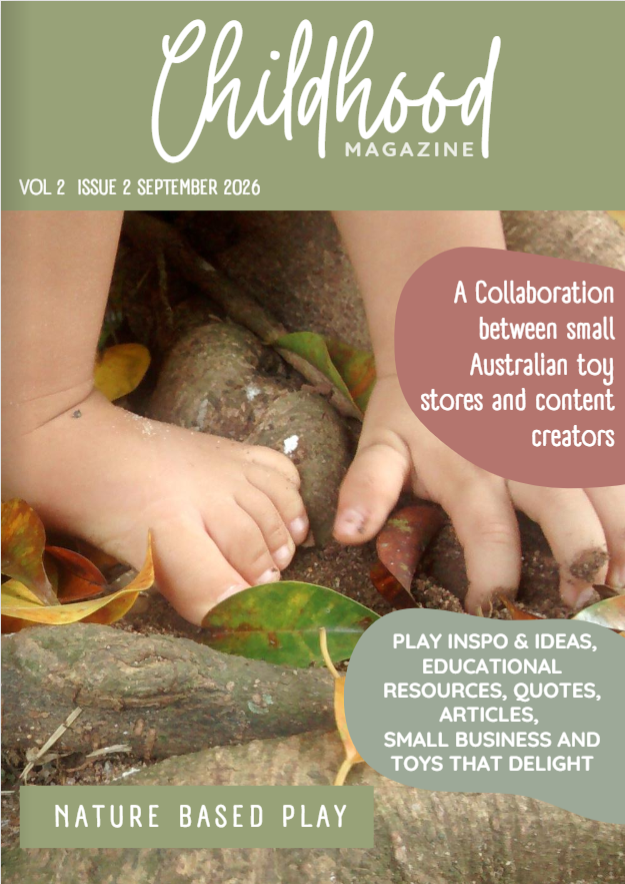
Explore the Nature Play issue of Childhood Magazine
Our latest edition of Childhood Magazine is dedicated to Nature-Based Play, celebrating the many ways nature invites curiosity, creativity, movement, investigation and connection.
Inside you'll find inspiration for bringing more nature into children's everyday play and learning, whether you have access to sprawling outdoor spaces or simply want to introduce more natural materials into the environments you already have.
From mud and gardens to natural loose parts, outdoor exploration and practical ideas for educators and families, this edition is an invitation to rediscover one of childhood's oldest and richest resources:
the natural world itself.
[READ CHILDHOOD MAGAZINE: THE NATURE BASED PLAY ISSUE →]
Childhood Magazine | Vol. 2 | Issue 2 | 2026
Add comment
Comments